Invited Speakers

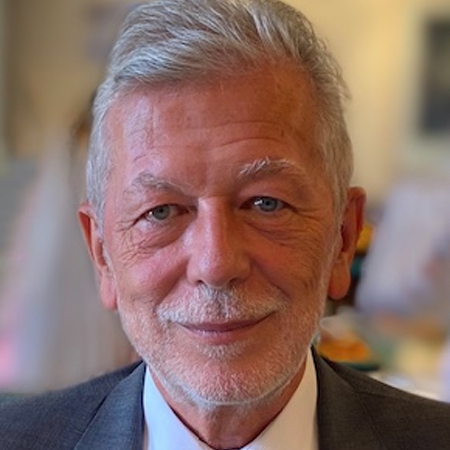
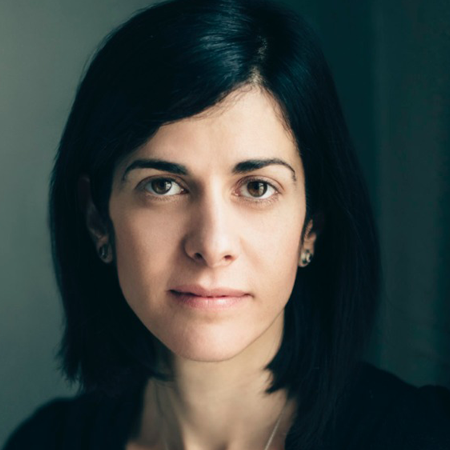
Belen Masia Universidad de Zaragoza, Spain
Belen Masia is a tenured Associate Professor (Profesora Titular) in the Computer Science Department at Universidad de Zaragoza. She is a member of the Graphics & Imaging Lab of the I3A Institute, and of the Vision, Image and Neurodevelopment Group of the IIS Aragon Institute. Her research focuses on the areas of computational imaging, applied perception, and virtual reality. Before, she was a postdoctoral researcher at Max Planck Institute for Informatics. Belen received a Eurographics Young Researcher Award in 2017, a Eurographics PhD Award in 2015, an award to the top ten innovators below 35 in Spain from MIT Technology Review in 2014, and an NVIDIA Graduate Fellowship in 2012. She has served as an Associate Editor for ACM Transactions on Graphics, Computers and Graphics, and ACM Transactions on Applied Perception. She also co-founded DIVE Medical, a startup devoted to enabling an automatic, fast, and accurate exploration of the visual function, even in non-verbal patients.

Mel Slater Universitat de Barcelona, Spain
Mel Slater is a Distinguished Investigator at the University of Barcelona in the Department of Clinical Psychology. I am also an active member of the Institute of Neurosciences. He was at ICREA 2006-2017. Mel is a co-Director of the Event Lab (Experimental Virtual Environments for Neuroscience and Technology). His background is computer science in the field of computer graphics and virtual reality. He was at the Department of Computer Science at UCL where he founded the Virtual Environments and Computer Graphics group. His research in the UK was supported mainly by the EPSRC, and in Barcelona by the EU FP7 and Horizon programmes and European Research Council Advanced Grants. Mel was Immersive Fellow with London's Digital Catapult 2017 and 2018, a Research Award Winner of the Alexander von Humboldt Foundation in 2021, and was elected to the IEEE VGTC Virtual Reality Academy in 2022. He is also a co-Founder of Kiin.tech S.L. and a coordinator of the European Metaverse Research Network.

Sun Joo (Grace) Ahn University of Georgia, USA
Dr. Ahn teaches undergraduate-level research methods, graduate-level user experience research, communication theory, and advertising and society. Her research examines how social media, video/internet games, and immersive virtual environments influence user attitudes and behaviors. She also directs the Center for Advanced Computer-Human Ecosystems (CACHE) lab. Her main program of research investigates how interactive digital media transform traditional rules of communication and social interactions, looking at how virtual experiences shape the way the way that people think, feel, and behave in the physical world. Her work has helped establish foundations for the theoretical advancement of virtual experiences in mediated environments and how their effects transfer into the physical world in four different contexts: health, consumer psychology, conservation, and education. Her ongoing work includes a NSF funded project exploring the application of virtual agents to promote STEM learning for children in informal learning environments, such as children’s museums. Her work has been published in a number of flagship outlets, including Journal of Advertising, Journal of Computer-Mediated Communication, Communication Research, Journal of Health Communication, Human-Computer Interaction, and Media Psychology.

Arthur Pointeau Be Another Lab, Spain
Arthur is an engineer, artist, and researcher working at the intersection of cognitive sciences and interactive media, with a particular interest in the social transformations driven by interactive technologies and their relationship with embodiment. His work explores media such as virtual and augmented reality from a critical perspective. He received an MSc in Cognitive Systems and Interactive Media from Pompeu Fabra University in 2013. He is a co-founder of the Barcelona-based art-science collective BeAnotherLab, whose interdisciplinary, innovative, and open-source work has received numerous international awards, including recognition at Ars Electronica, the STARTS Prize, the European Social Innovation Award, and the Global Pluralism Award. Over the past decade, the collective’s projects have been presented in more than 20 countries in collaboration with art festivals, research centers, schools, libraries, and other community-oriented spaces and organizations dedicated to the commons. He currently works as an Associate Researcher in the Department of Psychology at the University of Basel and as a freelance creative coder. He resides in Zurich.
Sergi FernándezVolum Technologies, Spain
Sergi Fernandez is the Head of Media Networks Research at i2CAT. He has a strong knowledge of video technologies and experience in different business sectors (entertainment, broadcast, mobility, industry, cultural heritage) and a good knowledge of the different research funding programmes in Spain and Europe. With a Master's Degree in Artificial Intelligence and a Computer Engineering Degree from Universitat Politècnica de Catalunya. Relevant articles in the video technology domain and mainly focused on VR/AR since 2016. Building and researching on holoconferencing technology to connect people using volumetric video real time.
Marc MartosVolum Technologies, Spain
Marc Martos is a Senior R&D Engineer and Development Team Leader at the i2CAT Foundation (Barcelona, Spain). He holds a B.Eng. in Interactive Digital Content from ENTI-UB and a Postgraduate Degree in Artificial Intelligence with Deep Learning from UPC. At i2CAT, he leads software development within the Media Internet Area, focusing on immersive communication, real-time volumetric video, GPU computing, and XR technologies. His work combines technical leadership, system architecture design, and research coordination across European R&D projects. He has contributed as lead developer or WP leader in projects such as VR-Together, MedGAIMS, PRESENCE, DIDYMOS-XR, XR-ECO, and HEAT, specializing in holoportation and volumetric video streaming systems. Marc is also part of Volum, a spin-off emerging from i2CAT’s research outcomes, dedicated to commercializing advanced holoportation and XR solutions.
Organizing Committee
Sandra MalpicaUniversidad de Zaragoza, Spain
Sandra Malpica is currently an Assistant Professor at the Universidad de Zaragoza. Previously she was an Assistant Professor at the Centro Universitario de la Defensa (Zaragoza, Spain). She is a member of the Graphics and Imaging Lab group. Sandra obtained her PhD in Computer Science in 2023 at Universidad de Zaragoza, under the supervision of Belen Masiá and Diego Gutiérrez. Her research interests include perception in immersive environments.
Marta OrdunaNOKIA XR Lab, Spain
Marta Orduna is a researcher at Nokia Extended Reality Lab in Madrid, Spain. In 2023, she received her PhD from UPM entitled "Understanding and Assessing Quality of Experience in Immersive Communications”. Currently, she continues her research line of the PhD in the area of quality of experience in extended reality. She serves as the Nokia delegate at ITU-T SG-12 and is actively involved in VQEG-IMG. She is also a member of the Governing Board of the COIT-AEIT and of the Technical Area Committee on Visual Information Processing of EURASIP.
Jesús GutiérrezUPM, Spain
Jesús Gutiérrez is Associate Professor at the Grupo de Tratamiento de Imágenes (GTI) of the Universidad Politécnica de Madrid (UPM), Spain. His research interests are in the area of image and video processing, evaluation of user quality of experience, immersive media technologies, and visual attention and human perception. Currently, he is the chair of Immersive Media Group (IMG) of the Video Quality Experts Group (VQEG) and member of the Technical Area Committee on Visual Information Processing of EURASIP.
Pablo PérezNOKIA XR Lab, Spain
Pablo Pérez is lead scientist at Nokia Extended Reality Lab in Madrid, Spain. He is currently leading the scientific activities of Nokia XR Lab, addressing the end-to-end technological chain of the use of Extended Reality for human communication: networking, system architecture, processing algorithms, quality of experience and human-computer interaction. He is also Nokia delegate in ITU-T SG12 and member of the board of VQEG.
Telmo ZarraonandiaUC3m, Spain
Telmo Zarraonandia is an Associate Professor at Universidad Carlos III de Madrid (Spain). Telmo's research primarily focuses on exploring the potential of immersive technologies to support education and designing tools to eliminate obstacles to their widespread adoption by non-experts. He is a member of the committee of the group of Educational Games and Simulations of the Spanish Chapter of the IEEE Education Society, and of the IEC evaluation group SEG 15 Metaverse.
Elena Márquez SeguraUC3m, Spain
Elena Márquez Segura is a Beatriz Galindo Distinguished Researcher at Universidad Carlos III de Madrid (Spain). She has a multidisciplinary background and works at the intersection of Interaction Design (IxD), Human-Computer Interaction (HCI), and Games and Play. In particular, her work centers on embodied design methods; and on designing and studying technology-supported physical and social experiences, many of which in the realms of games and immersive technologies.
Mario MontagudUV & i2CAT Foundation, Spain
Mario Montagud is a Senior Researcher (Ramón y Cajal fellow) and Part-Time professor at University of Valencia and i2CAT Foundation. He is (co-)author of over 100 scientific publications, has contributed to standardization within different organizations, and has participated in many research projects. His topics of interest include Next-generation Networks, Interactive and Immersive Media (e.g., Virtual/eXtended Reality), Accessibility, Human Computer Interaction (HCI) and Quality of Experience (QoE).
Narciso GarcíaUPM, Spain
Narciso García is a Professor of Signal Theory and Communications at Universidad Politécnica de Madrid (Spain), where he leads the Grupo de Tratamiento de Imágenes (Image Processing Group). He has been actively involved in Spanish and European research projects, also serving as an evaluator, a reviewer, an auditor, and an observer of several research and development programs of the European Union. His current research interests include digital video compression, computer vision, and quality of experience.
Ana Tajadura-Jiménez UC3m, Spain UCL, UK
Ana Tajadura-Jiménez is an Associate Professor at Universidad Carlos III de Madrid (UC3M, Spain) and Honorary Research associate at the University College London Interaction Centre (UCLIC, UK). She leads the i_mBODY lab, in which research focuses on understanding how sensory-based interaction technologies could be used to alter people’s perceptions of their own body, their emotional state and their motor behaviour patterns. In this sense, she is Principal Investigator of the projects Magic OutFit and BODYinTRANSIT (funded by an European Research Council Consolidator Grant).
Sergio CabreroVicomtech, Spain
Sergio Cabrero leads the Interactive Media Technology research line at Vicomtech, a technology center specialized in Artificial Intelligence, Visual Computing and Interaction. Previously, he worked at IBM, CWI, and Universidad de Oviedo. He investigates multimedia, distributed and interactive systems applied to different verticals such as culture, media, industry, security, or mobility. He currently leads projects in XR, volumetric media, and media orchestration.
Esther MadejónUPM, Spain
Esther Madejón is a technician in the Grupo de Tratamiento de Imágenes (GTI) of the Universidad Politécnica de Madrid (UPM), Spain. She coordinates the dissemination and communication activities of the research group and, in turn, she manages GTI's Dem-3DTV, an environment for innovation, experimentation and co-creation, where researchers, companies, standardization bodies and public institutions work together, looking for new solutions, products or services, involving real users in the whole research process, fostering cooperation.